Frosted Lines: The Typeface with a Story Etched in Every Stroke
You know the feeling when you pick up an old book at a flea market, and the cover has this worn, tactile quality? Or when you see a vintage sign where the paint has cracked just enough to reveal layers of history underneath? That’s the essence of the Frosted Lines font. It’s not just another script; it’s a piece of visual storytelling, a premium font that carries the weight of ancient writings and the whisper of a dry-brush on rough parchment. If your work needs to feel grounded, authentic, and rich with texture, you’ve just found a powerful design asset.
More Than a Font: A Texture, A Mood, A Statement
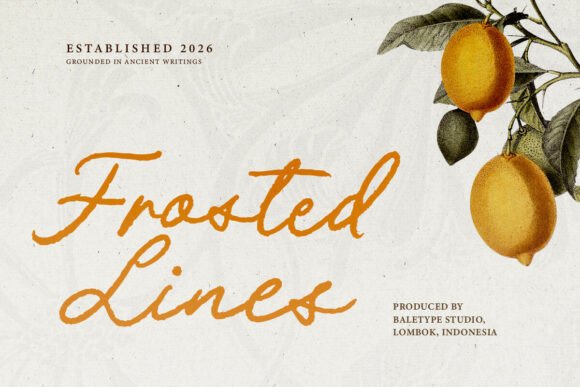
Let’s break down what makes Frosted Lines distinct. This isn’t a clean, polished script. It’s a handwritten font with a deliberate, beautiful imperfection. The characters are defined by their dry-brush effect—strokes that fray at the edges, with visible texture that looks like it was painted with an old, frayed brush or etched into stone. The overall personality is one of heritage, organic craftsmanship, and rustic luxury. It’s a typeface that prioritizes atmosphere over precision, making it a standout choice for brands that tell a story of tradition and handcrafted quality.
This character makes it a perfect fit for specific sectors. Imagine a label for an artisanal wine, where the Frosted Lines font spells out the vineyard name against a textured, recycled paper background. Picture it on packaging for craft chocolate or single-origin coffee, where it communicates the care and origin of the product. It pairs beautifully with vintage botanical illustrations, creating a cohesive visual language that feels both timeless and intentional. For designers and brand strategists, this font offers a shortcut to evoking a specific, powerful emotional response.
Practical Applications: Where Frosted Lines Truly Shines
Knowing a font’s style is one thing; understanding where to deploy it is where the real value lies. Frosted Lines is a display font, meaning it’s built for impact, not for body copy. Its textured details can become visually noisy at small sizes, so readability in long paragraphs is not its strength. Instead, think of it as your hero element.
- Branding & Logo Design: Use it for logotypes or taglines for businesses in the food, beverage, outdoor, or heritage goods space. It instantly communicates authenticity and a connection to craft.
- Packaging Design: This is its sweet spot. Apply it to product names, variety labels, or short descriptive lines on boxes, bags, and bottles. It adds a layer of tactile interest that clean serif fonts or sans serif fonts simply cannot achieve.
- Editorial & Publishing: For magazine covers, chapter headings in a cookbook, or pull quotes in a lifestyle publication, Frosted Lines adds a dramatic, textured touch. It’s excellent for creating visual hierarchy that draws the eye.
- Digital & Web Design: Use it sparingly for impactful website headers, hero section titles, or as a stylistic element in a branded PDF or email newsletter. Its texture translates well to screens, adding depth to flat digital layouts.
- Social Media Graphics: Create scroll-stopping posts. A headline set in Frosted Lines over a blurred background or a textured overlay can make your content feel more premium and curated.
For personal projects, it’s a fantastic creative font for crafting, wedding invitations with a rustic theme, or personal branding for artists and makers who want their work to feel handmade and genuine.
Strategic Pairings and Readability Considerations
Because Frosted Lines carries so much personality, using it effectively requires thoughtful font pairing. You don’t want to pair it with another highly stylized script or a complex serif. The goal is balance and contrast.
A proven approach is to pair it with a clean, neutral sans serif font. A geometric sans serif like Montserrat or a humanist sans serif like Lato provides a calm, readable counterpart that lets the texture of Frosted Lines stand out without competition. For a more traditional or editorial feel, a sturdy, readable serif font like Merriweather or Lora can work beautifully, creating a dialogue between the historic texture of the display font and the classic authority of the serif.
When testing, always view the font in context. Set your intended headline in Frosted Lines and pair it with your body copy font. Check the contrast in weight and style. Is the hierarchy clear? Does the texture overwhelm the layout or enhance it? Review the included character set—does it have the ligatures or alternates you need for your project? This hands-on evaluation is crucial.
Finally, remember the practical side: commercial licensing. If you’re using Frosted Lines for a client project, a product for sale, or any commercial endeavor, ensure you have the correct license. This protects you and respects the work of the type designer. Investing in a premium font like this is an investment in your brand’s visual identity, ensuring consistency and professionalism across all touchpoints.
Final Thought: Let the Texture Tell Your Story
Frosted Lines isn’t for every project, and that’s its power. It’s a specialized tool in your design assets kit. When your goal is to evoke a sense of history, organic quality, or rugged luxury, this typeface does the heavy lifting. It invites your audience into a narrative, making your brand feel more tangible and real. In a world of sleek, digital perfection, sometimes the most compelling design choice is one that feels beautifully, authentically human.